

How to Clean Window Sills and Tracks Without Making a Muddy Mess
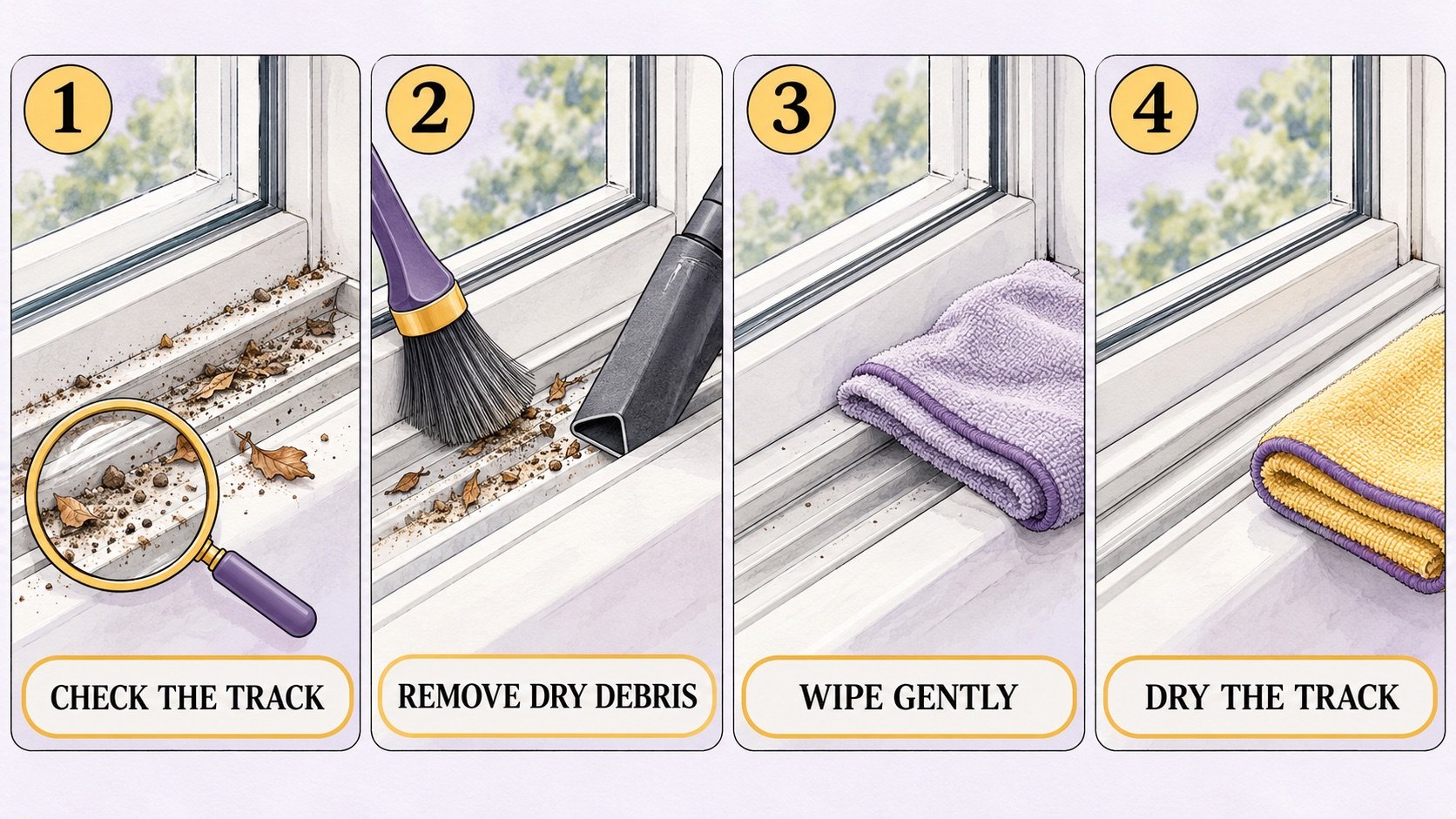
Illustration for an intact modern window track: inspect first, remove loose dry debris, wipe gently and dry. Follow window-manufacturer care instructions; do not scrape damaged or old painted finishes.
Safety stop: do not dry-brush, scrape or use a regular vacuum on flaking old paint or suspected lead paint. Follow lead-safe guidance and the manufacturer’s care instructions. Do not pour water into tracks or disassemble the window as a generic cleaning step.
The four-step dry-first sequence
Inspect: check the sill, track, weatherstripping and visible drainage openings before disturbing debris.
Remove loose material dry: use a soft brush and suitable vacuum attachment while keeping hard edges off the finish.
Wipe with controlled moisture: follow the window manufacturer’s instructions and use only a lightly damp cloth where permitted.
Dry promptly: remove permitted residue and leave the track dry without blocking drainage openings.
Compare professional scope, review appointment preparation, or request an estimate.
The easiest way to avoid muddy window tracks is to remove loose dirt before adding any moisture. Vacuum first, loosen what’s left with a soft brush, then wipe with a barely damp cloth. That order keeps dust and grit from turning into a gray slurry you have to chase around the frame.
This guide covers routine household dirt on accessible sills and tracks in good condition. Check your window manufacturer’s care instructions first, especially for wood, painted finishes, and specialty hardware.
Gather a few simple supplies
You’ll need a vacuum with a soft brush or crevice attachment, a small soft-bristled brush, several microfiber cloths, and a towel to protect the floor. Have clean water and a mild cleaner approved for your window material nearby.
Keep one cloth for damp cleaning and another for drying. Starting with clean tools helps you avoid dragging grit across the finish.
Check the surface before you start
Open the window only as directed by its manufacturer. Don’t force a stuck sash, pull apart the frame, or lean outside to reach an awkward corner.
Look for loose paint, bare wood, damaged seals, or soft spots. Those need a different approach from ordinary dirt. If old paint is flaking or you suspect lead paint, stop before dry brushing or using a regular vacuum. Follow EPA lead-safe cleaning guidance instead. Homes built before 1978 deserve particular caution.
Remove the loose dirt while it is dry
Lay your towel below the window. Vacuum the broad sill first, then move into the track and corners. Keep hard nozzle edges from scraping the frame.
Use a soft, dry brush to gently loosen grit the vacuum missed. Hold the vacuum nearby to collect it, working in small sections. Lift debris away from weatherstripping rather than pushing it underneath.
Repeat this pass until most of the loose material is gone. If you can still see piles of dust or grit, adding water now will make the job messier.
Wipe with controlled moisture
For materials whose care instructions allow mild soap and water, prepare a mild solution according to the cleaner’s label. Dampen your cloth and wring it out well. It should leave a light film of moisture, without dripping.
Wipe one short section at a time. Fold the cloth to expose a clean side as it picks up dirt, and replace the cloth when it gets dirty. A narrow fold can reach small grooves without a metal scraper or sharp tool.
If grime remains, make another gentle pass with a fresh cloth. Avoid soaking the area or scrubbing harder to remove a mark that may be a stain or damaged finish. Test an unfamiliar approved cleaner in an inconspicuous spot first.
Remove soap residue as the manufacturer directs. On surfaces that permit it, a separate cloth lightly dampened with clean water helps keep the rinse controlled. Dry the sill and track promptly with a clean, soft cloth.
Be especially gentle with wood and paint
Finished wood and painted sills need minimal moisture and a cleaner suited to their finish. Keep liquid out of joints and wipe up drips immediately. Don’t wet-clean bare, cracked, or deteriorating wood as though it were a sound finished surface.
Skip abrasive pads, metal scrapers, and improvised chemical mixtures. A cleaner suitable for the glass may not be suitable for the surrounding frame or hardware. When you’re unsure what the surface can tolerate, check with the window manufacturer before continuing.
Keep drainage openings clear
Some windows have small drainage openings called weep holes. These let water leave the window assembly. Don’t push dirt into them, block them with a cloth, or poke tools deep inside.
Follow your model’s instructions for clearing visible debris around the openings. Don’t pour water into the track or use a hose or pressure washer to flush it out. If water keeps pooling or you notice a leak, have the window checked rather than adding more cleaning liquid.
Make the next cleanup easier
A quick check when you clean the glass can catch loose dirt before it builds up. Dusty weather, nearby construction, and open-window season may mean the tracks need attention sooner. Clean when you notice buildup rather than waiting for a packed layer of grime.
Prefer to have the details handled? DiamondClean Solutions offers window cleaning, including sill and track cleaning, in Norwalk and the Des Moines metro. Request a free estimate and let us know which windows need attention.