

Why Green Buildup Keeps Appearing on Siding and Patios
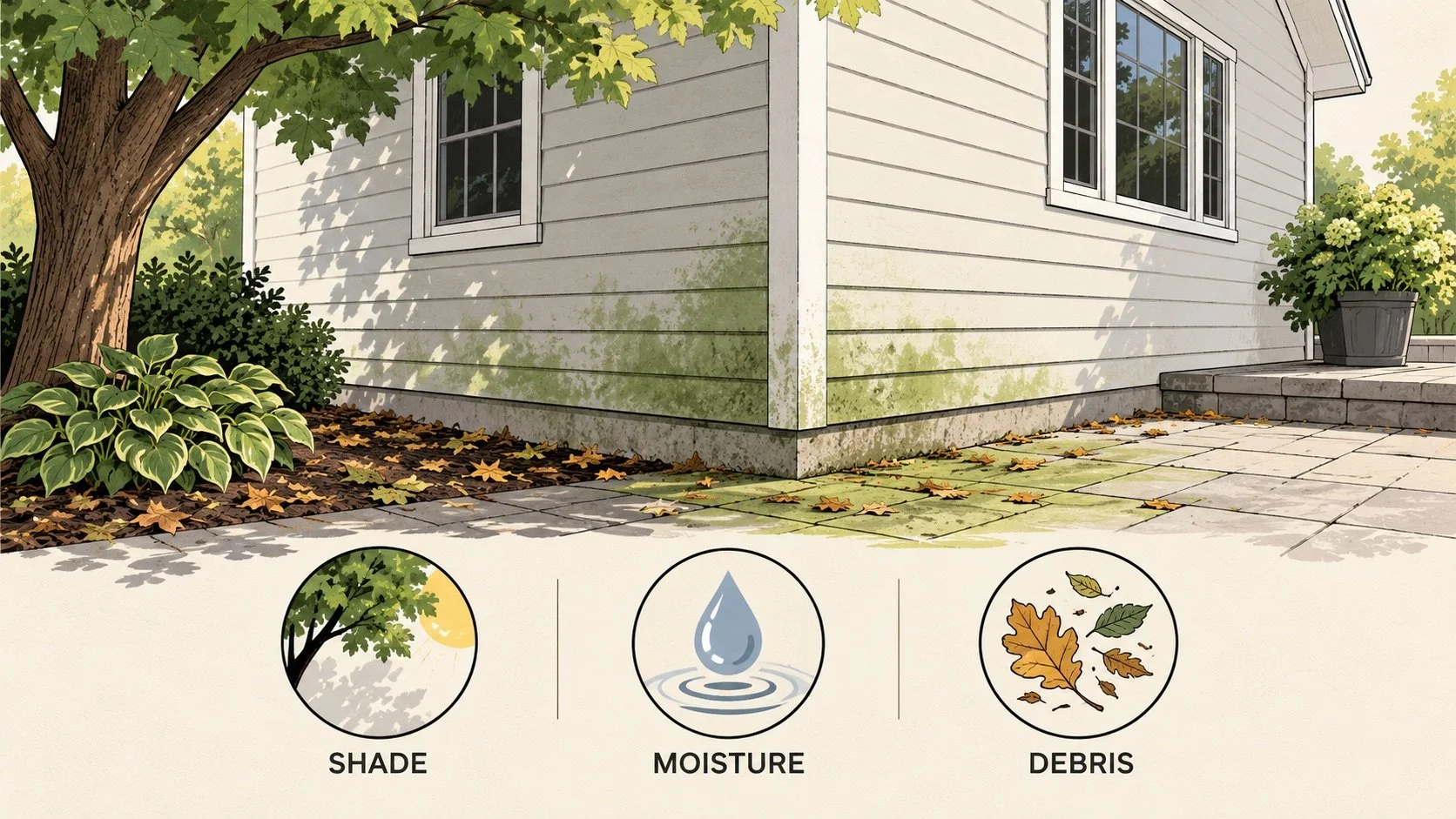
Illustration: shade, repeated moisture and trapped debris can contribute to recurring exterior buildup. Appearance alone does not establish its cause.
A quick observation checklist
Before choosing a cleaning method, note what is visible and where it appears:
The exact surface and side of the property
Shade, irrigation, drainage and nearby debris
How long the area stays wet
When it was last cleaned and how quickly the mark returned
A hypothetical example
A shaded patio corner that collects leaves and stays damp after rain may change sooner than nearby sunny concrete. That pattern is useful context, but it does not identify the organism or prove the cause.
Keep a simple photo log
Save a dated wide photo and close-up. Record the location, recent rainfall or irrigation, visible debris and the time until recurrence. This makes changes easier to compare without turning appearance into a diagnosis.
Next, compare pressure washing and soft washing, use the driveway and patio inspection guide, or request an estimate.
You clean an exterior surface, enjoy the improvement, and eventually notice a green patch in the same place. The tempting response is to ask for a stronger wash. A more useful first step is to look at what keeps that particular spot different from the rest of the property.
Shade, repeated wetting, and accumulated debris can all be part of the picture. Around a Norwalk or Des Moines home, the side wall behind shrubs may have very different conditions from an open, sunny patio. Cleaning addresses what is on the surface; the surrounding conditions also deserve attention.
Green does not identify the problem by itself
Green discoloration can be associated with algae or other biological growth, but color alone is not a reliable diagnosis. Dirt, staining, weathered coatings, and different types of growth can create confusing appearances. A photograph can help start a conversation without proving exactly what is present.
Sherwin-Williams notes that mildew can appear in several colors and tends to form on damp surfaces or those receiving little direct sunlight. That explains why conditions matter, while also showing why a green mark should not automatically be labeled algae.
Describe what you can observe: where the patch appears, whether it feels slippery underfoot, how long the area stays wet, and when it last received attention. Leave identification and treatment decisions to an appropriate professional.
Look for a pattern of repeated wetting
From a safe location, observe the area after ordinary rain or irrigation. Does a sprinkler repeatedly reach the siding? Does water spill from a gutter? Is there a low section of patio where puddles remain? Does runoff follow the same path each time?
These observations do not establish a structural problem, but they help identify questions worth investigating. If a patch sits directly below an overflowing gutter, cleaning alone will not change where that water goes. Have drainage or building concerns assessed by the relevant professional rather than assuming another wash will solve them.
Notice shade and trapped debris
Look behind accessible furniture and along the edges of planting beds. Leaves may collect in a sheltered corner, while a planter or outdoor rug can conceal a persistently damp area. Check without walking onto a slick patch or lifting anything too heavy to handle safely.
For wood decks, the Western Red Cedar Lumber Association's maintenance guidance emphasizes drainage, removing debris, and allowing areas beneath accessories to dry. The broader question for any exterior space is worth asking: what is preventing this area from drying or being maintained normally?
Keep landscaping decisions proportionate. You do not need to remove a healthy tree because one patio corner needs more attention. Discuss practical adjustments with a qualified landscaper when vegetation, airflow, or access appears to be contributing.
Choose cleaning for the surface underneath
A green film on siding and a green film on pavement do not make those materials equivalent. Siding may call for a gentler, manufacturer-compatible method. A driveway or patio still needs an assessment of its material, coating, joints, and condition.
Tell the cleaner about any previous treatment and how soon the discoloration returned. Include known product names when available, but do not apply another cleaner in anticipation of the appointment. Avoid experimenting with chemical combinations or increasing pressure to chase a stain.
If the finish is peeling, wood appears deteriorated, or moisture is getting indoors, discuss repair or specialist evaluation before routine exterior cleaning. Surface appearance cannot reveal the full condition of the building.
Set realistic expectations for recurrence
Outdoor surfaces remain exposed to weather and their surroundings after cleaning. No reasonable maintenance plan can promise that a shaded exterior will stay free of buildup forever. The useful goal is to understand the location, address practical contributing conditions, and choose a cleaning interval based on what actually happens.
Keep a few dated photographs and note when the first signs return. If only one area changes, share that detail. It can help focus the next assessment instead of treating the whole property as though every surface has the same needs.
Get help with the next step
DiamondClean Solutions offers soft washing and pressure washing in the Des Moines metro. Request a free estimate and describe the recurring area, surface material, and any visible water pattern. Those details help make the cleaning conversation more useful from the start.