

Pressure Washing vs. Soft Washing: Which Does Your Home Need?
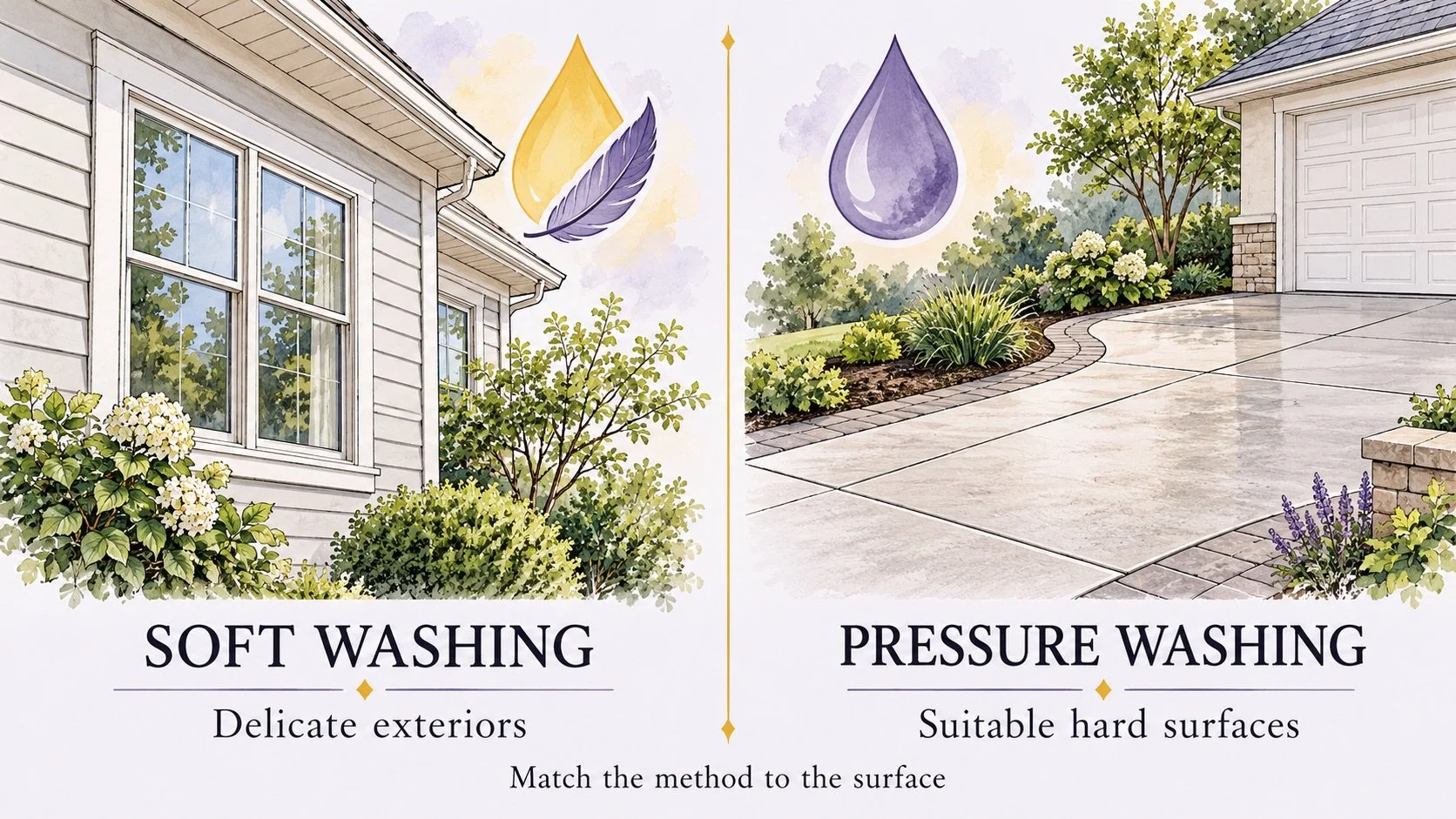
Illustration: the cleaning approach depends on the surface, its condition and manufacturer guidance. Discuss the appropriate method before work begins.
A surface-and-method comparison
Painted or manufactured siding: discuss a lower-pressure, product-compatible approach and check the manufacturer’s care instructions.
Concrete and masonry: pressure may be suitable, but coatings, age, cracks, joints and surrounding materials still affect the plan.
Wood and composite decking: identify the product and finish first; do not assume one pressure or cleaner suits every board.
The material, its condition and its written care guidance remain the final authority. A mixed property may need more than one method.
Continue with the surface-risk guide, review appointment preparation, or request an estimate with the surfaces you want assessed.
A dirty driveway and a green patch on siding can make the same house look overdue for cleaning. They do not necessarily need the same treatment. Pressure washing and soft washing serve different purposes, and a good cleaning plan starts with the material underneath the dirt.
For homeowners in Norwalk and the Des Moines area, the useful question is simple: which approach suits each part of the property? Understanding the difference makes it easier to compare estimates and avoid paying for an unsuitable method.
What is pressure washing?
Pressure washing uses pressurized water to loosen and remove surface buildup. It can be appropriate for durable exterior areas, including many concrete driveways, sidewalks, and patios. The surface still needs an inspection before work begins. Age, existing damage, coatings, and the manufacturer's care instructions all matter.
A concrete-looking surface may be decorative, sealed, or part of a paver system. Those details can change the cleaning plan. Stronger equipment does not automatically produce a better result, and maximum pressure should never be the goal.
What is soft washing?
Soft washing combines lower-pressure application and rinsing with cleaning products selected for the surface and the buildup. It is commonly considered for house exteriors where aggressive washing could damage a finish or material.
The term describes an approach, not a universal recipe. A suitable cleaner for one siding product may be inappropriate for another. Low pressure also does not eliminate the need to protect nearby landscaping, windows, fixtures, and other materials. Product compatibility and careful handling remain important.
Start with the manufacturer's instructions
Siding deserves particular care. For example, James Hardie's cleaning guidance advises against high-pressure power washing its siding and trim. A generic promise to “power wash the whole house” is therefore not enough information for a homeowner with that product.
Composite decking also varies by product line. Trex's care guide gives different instructions for high-performance and early-generation decking. Identifying the product is more useful than assuming every deck can be cleaned the same way.
If you have installation paperwork, a warranty booklet, or a leftover product label, share it when requesting an estimate. If the material is unknown, say so. Guessing based on appearance can overlook important restrictions.
A mixed property may need a mixed approach
Imagine a home with a concrete driveway, painted trim, vinyl siding, and a composite deck. It is reasonable to request one coordinated exterior-cleaning project, but each surface needs its own assessment. Ask the contractor to identify the method for each area rather than treating the property as one uniform surface.
This also helps define the scope. A driveway estimate may not include front steps, a side walkway, retaining walls, or the patio behind the house. Listing those areas ahead of time makes comparisons more meaningful and reduces surprises on appointment day.
Match expectations to the problem
Cleaning can remove buildup, but it cannot repair cracked concrete, failing paint, rotten wood, or damaged siding. Some discoloration may come from a worn finish rather than removable dirt. Oil, rust, and other established stains may need separate treatment and may remain visible afterward.
Explain the result you want. Preparing for an outdoor gathering, improving a listing's presentation, and getting ready for a coating project can require different scheduling and preparation. For painting or sealing, coordinate the cleaning plan and drying requirements with the contractor responsible for the finish.
Questions worth asking before you book
What material and finish are we cleaning, and are there manufacturer restrictions?
Which areas are included in the estimate?
What existing damage or difficult stains could affect the result?
How will nearby plants and sensitive surfaces be considered?
Does anything need repair before cleaning can proceed?
DiamondClean Solutions offers pressure washing and soft washing in the Des Moines metro, including Norwalk. Request a free estimate with the areas you want cleaned and any material information you have. That gives the conversation a practical starting point: the right care for your property.