

Can Pressure Washing Damage Siding, Concrete, or Wood?
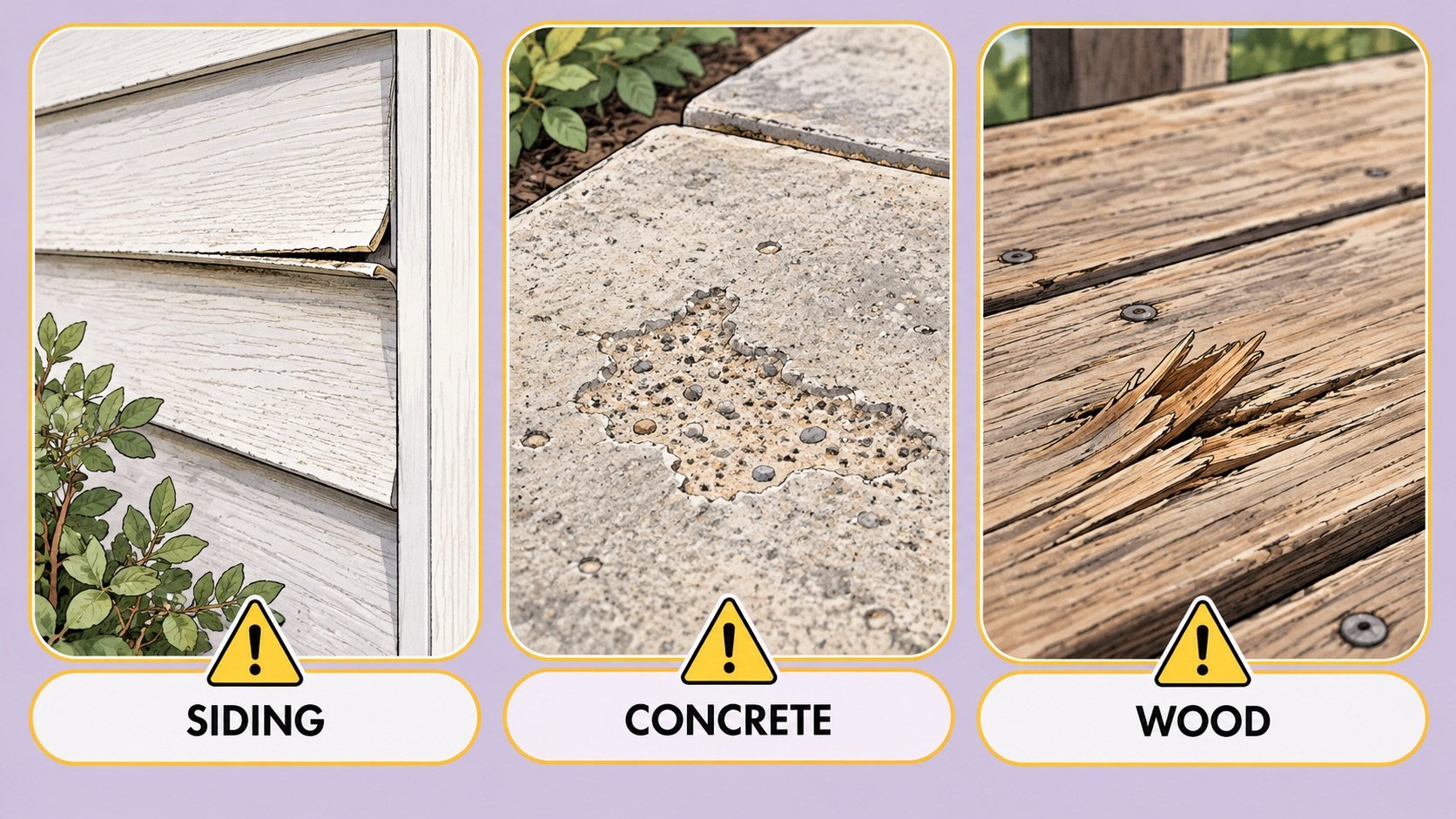
Illustrative surface-condition examples to discuss before cleaning. These are not photographs of a DiamondClean project or evidence of damage caused by cleaning.
A pause-and-check matrix
Loose siding, open joints or failed caulk: pause and discuss repair or water-entry risk before cleaning.
Peeling paint or an unknown coating: identify the finish and follow its care instructions.
Crumbling concrete, loose pavers or missing joint material: separate cleaning from repair and joint maintenance.
Soft, splintered or deteriorated wood: stop and have the condition assessed; washing cannot restore damaged material.
Make a pre-cleaning photo record
Take a dated wide view and close-up of existing cracks, loose parts, worn finishes and stubborn marks. Label the surface and location, then share the relevant photos with the company before work begins.
Compare the cleaning methods, review the appointment checklist, or request an estimate.
Yes, pressure washing can damage siding, concrete, and wood when the method does not suit the surface. That does not make every exterior-cleaning project risky in the same way. It means the material, finish, and existing condition need to guide the work.
For a homeowner comparing cleaning services around Des Moines, the best protection starts with a clear conversation. Ask what is being cleaned, what restrictions apply, and whether any part of the property needs repair before cleaning begins.
Siding: the material and finish come first
“Siding” covers several different products, including vinyl, fiber cement, wood, and metal. Their care requirements are not interchangeable. Painted finishes, joints, trim, and nearby openings add further considerations.
James Hardie advises against high-pressure power washing its siding and trim. Its guidance is a useful reminder to consult the actual product manufacturer, even when the siding appears durable.
Before a house wash, identify loose panels, failing paint, damaged caulk, or windows that have leaked. Ask whether those issues need attention first. A cleaning appointment should not be treated as a way to test whether a questionable opening is watertight.
Concrete and pavers: hard does not mean damage-proof
A driveway can look robust while having a vulnerable surface or finish. Recent installation, repairs, decorative treatments, sealers, and visible deterioration should all be discussed. Ask the installer or product manufacturer about any restrictions when the surface is new or unfamiliar.
Pavers add another layer of complexity because the individual units and joints work together. Belgard warns that power washing can expose aggregate beneath a paver's surface. Its maintenance guidance also addresses keeping sanded joints filled.
For a paver patio, confirm whether the proposed work is cleaning only or includes any joint maintenance. If there are loose units, uneven areas, or crumbling edges, those concerns need their own assessment. Washing cannot correct settlement or restore missing material.
Wood: identify the species and the coating
A wood deck or fence needs a plan suited to its species, condition, and existing finish. A method intended to prepare one surface for refinishing may be inappropriate for another surface that only needs routine cleaning.
The Western Red Cedar Lumber Association's Real Cedar care guidance warns that power washers can seriously damage cedar and recommends against their use on cedar products. That is a strong reason to avoid treating “deck washing” as one standard service.
Composite materials deserve the same product-specific attention. Trex does not recommend pressure washing early-generation decking, while its guidance for certain newer lines differs. Age and product identity can change the answer.
Low pressure still requires judgment
Soft washing is often discussed as an alternative for more delicate exteriors. Lower pressure is only one part of the decision. The cleaning product, surface compatibility, nearby materials, and existing damage still matter.
Ask how the proposed cleaning plan follows your material's instructions. A contractor should be able to explain the approach without relying on a blanket claim that one technique is safe for everything. If the product cannot be identified or the surface is deteriorating, pausing for more information may be the sensible choice.
What a useful pre-cleaning discussion covers
The material, approximate age, and any known coating or sealer
Cracks, loose parts, peeling finishes, leaks, or previous damage
The difference between removable buildup and permanent wear
Manufacturer restrictions and any need for a small compatibility test
Repairs or specialist assessment that should happen before cleaning
Take photographs of existing concerns and share them when requesting an estimate. This helps everyone discuss the same areas. It also gives you a practical record for evaluating the result after the surface dries.
Choose the plan before the equipment
DiamondClean Solutions offers pressure washing and soft washing for properties in Norwalk and the Des Moines metro. Request a free estimate and include any product information or damage concerns. The useful outcome is a cleaning plan that respects the surface and sets realistic expectations before work starts.