

How to Prepare for a Professional Pressure-Washing Appointment
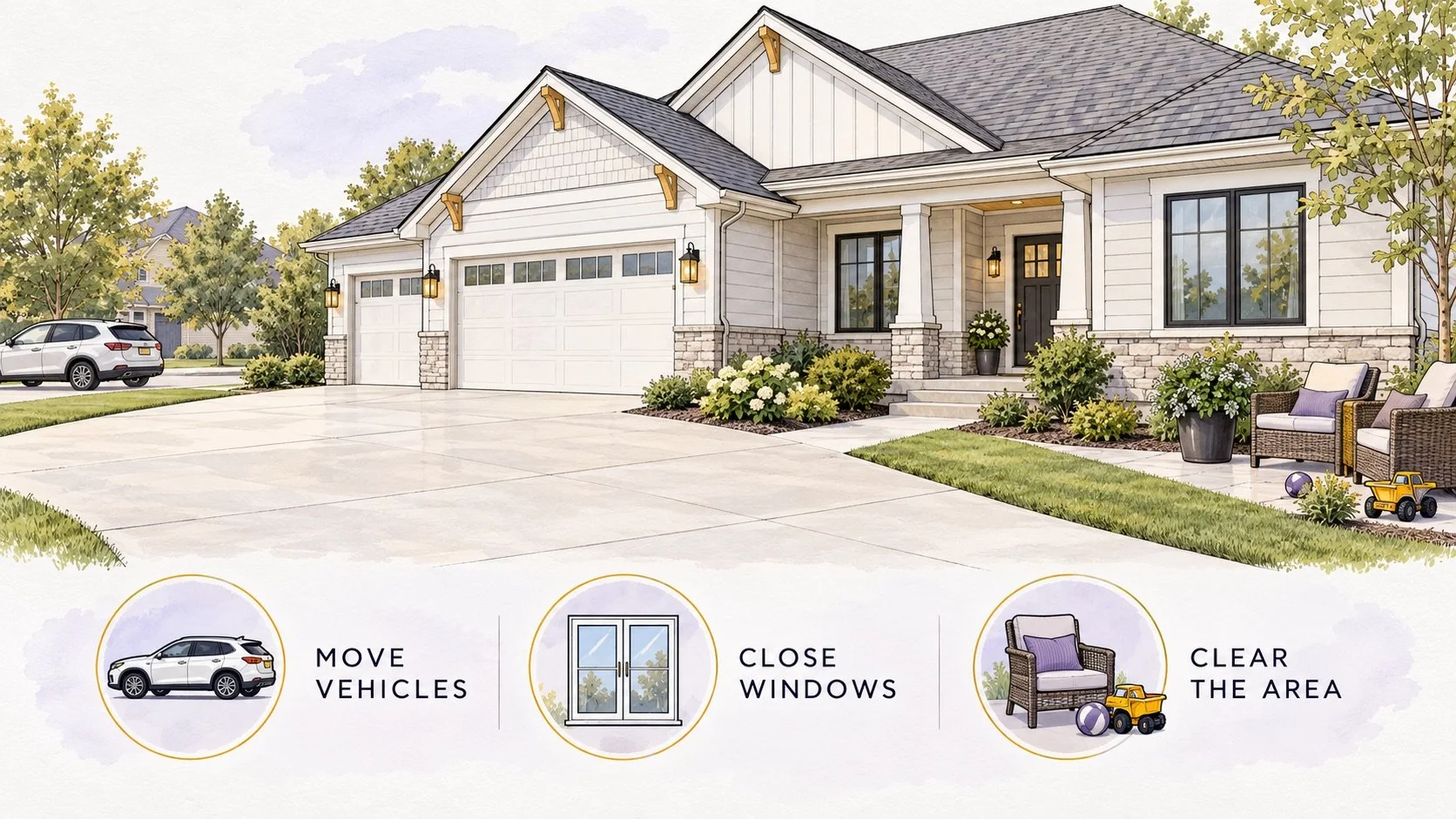
Illustration: clear the agreed work area and follow the preparation instructions provided for your appointment.
The short version: before, during and after
Before the visit
Confirm the exact surfaces and exclusions in the quote.
Move only lightweight items you can handle safely; discuss grills, large planters and heavy furniture.
Close nearby doors and windows and report openings that do not seal properly.
When the team arrives
Point out material information, existing damage, gates, landscaping, fixtures and access limits.
Keep pets and children away from the agreed work area.
At the final review
Review the included areas, remaining marks, drying guidance and any next steps.
Homeowner tasks should stay simple and safe. Leave equipment, chemical handling, electrical changes and difficult moving to a separate discussion. Review surface warning signs, compare cleaning methods, or request an estimate.
The most helpful preparation for a pressure-washing appointment happens before any equipment arrives. Clear access, a defined work area, and a short conversation about your property help the cleaning team plan the job and help you know what to expect.
Use this checklist for a driveway, patio, or broader exterior-cleaning visit. Your contractor's specific instructions should guide the final preparation, especially when the project includes delicate finishes, unusual materials, or areas with existing damage.
1. Confirm exactly what is included
Review the estimate and name the surfaces you expect to be cleaned. “Driveway and patio” may leave questions about steps, walkways, borders, retaining walls, or the space underneath outdoor furniture. Clarify those boundaries before the appointment rather than assuming every nearby surface is included.
If house washing is part of the visit, ask how the cleaning approach differs from the hard-surface work. Keep any painting, staining, or sealing plans in the conversation so the relevant contractors can coordinate preparation and drying requirements.
2. Share material information and known concerns
Tell the team about recent concrete work, paver installation, sealers, painted surfaces, or decking products. Installation paperwork and product names can be especially helpful. For example, Trex publishes different care guidance for different decking generations, so “composite deck” alone may not be enough detail.
Point out loose pavers, cracked surfaces, peeling paint, damaged siding, leaking windows, or fixtures that should receive special attention. Share what you know about persistent stains, including previous treatments. You do not need to diagnose the problem; identifying its location and history is useful.
3. Clear movable belongings safely
Ask where vehicles should be parked and when the area needs to be clear. Move bicycles, toys, doormats, cushions, and other lightweight items away from the agreed work zone. Keep a route open for people who still need to enter or leave the home.
Discuss grills, large planters, heavy furniture, and fragile decorations in advance. Do not strain yourself moving an item just because it sits on the patio. Confirm who will move it and whether the surface underneath is included. Avoid placing belongings where hoses, equipment, or rinse water may need to pass.
4. Review doors, windows, and exterior features
Close windows and doors near the work area, including garage doors when appropriate for the project. Let the contractor know about openings that do not seal properly. Existing leaks deserve attention before water is directed nearby.
Identify outdoor outlets, lighting, cameras, doorbells, and other fixtures. Ask the cleaning team what protection or access they require. Leave electrical covers, connections, and permanent equipment alone unless a qualified professional gives appropriate direction. Do not cover vents or change equipment settings on your own as a preparation step.
5. Discuss landscaping and access
Point out garden beds, delicate plants, edible gardens, ponds, and recently installed landscaping. Ask how these areas will be considered during the job. Follow the contractor's instructions rather than applying cleaners or covering vegetation yourself.
Confirm gate access, parking arrangements, and whether an outdoor water supply is needed. Mention a locked side yard, a shared driveway, or limited access behind the house. If a neighbor's property is close to the work zone, raise that during planning so the boundaries are clear.
6. Plan for pets, children, and the weather
Keep pets and children out of the work area while cleaning is underway. Arrange an alternative route for dog walks or school pickup if the usual entrance will be unavailable. Ask the contractor when the cleaned areas can be used again rather than assuming access is safe as soon as the equipment stops.
For an appointment in Norwalk or elsewhere around Des Moines, confirm how weather changes will be communicated. Share a reliable contact number and any time constraints. If you will be away, agree on the access and final-review arrangements beforehand.
Before the team leaves
Review the included areas and ask about remaining marks, drying, and any recommended next steps. Cleaning may reveal wear that dirt previously obscured, and some established stains can remain. Understanding those details is more useful than judging every wet surface immediately.
Ready to plan your visit? Explore DiamondClean Solutions' pressure-washing services or request a free estimate. Include the surfaces you want cleaned and any access or material concerns so preparation can start with the right information.